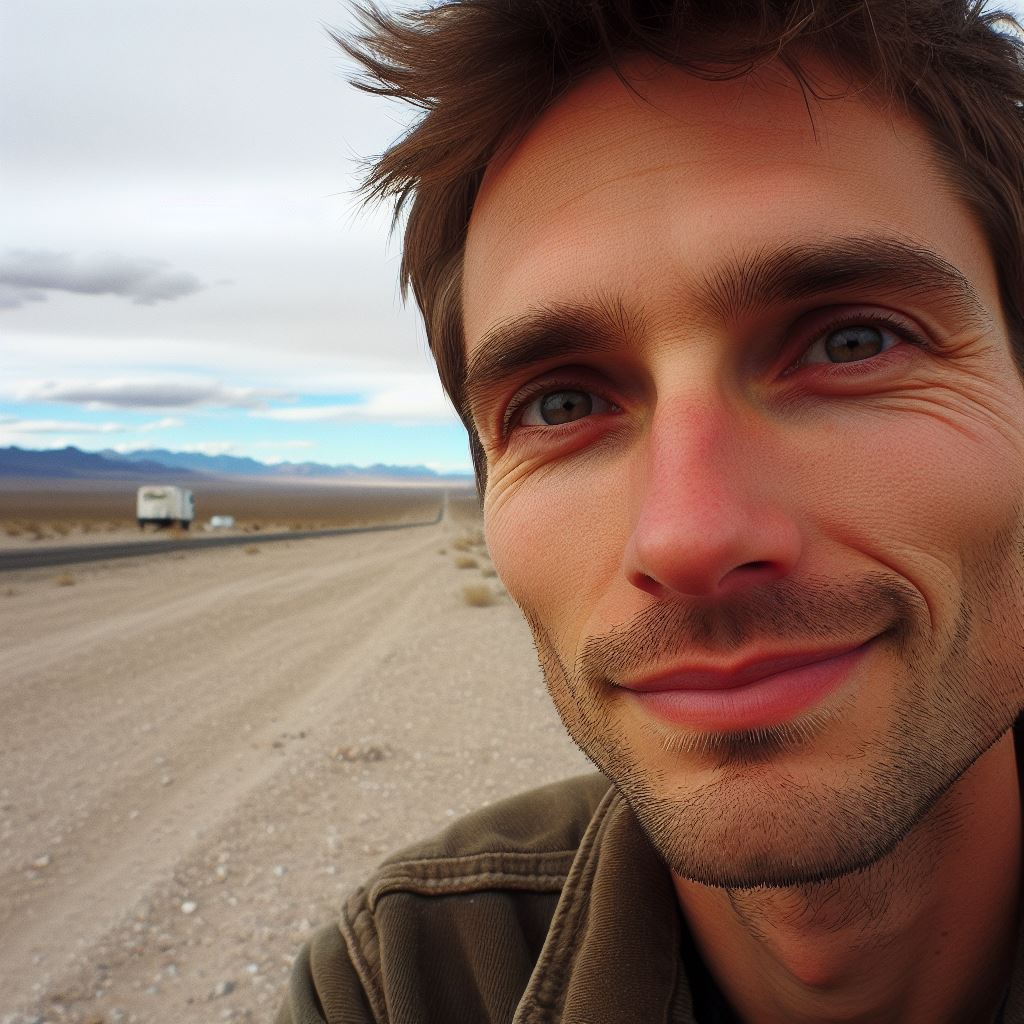
To find new species. Make a new discovery. New discoveries lead to new inventions. It will improve our understanding of Earth.
Why is exploration important?
Humans are driven to explore the unknown , discover new worlds, push the boundaries of our scientific and technical limits, and then push further. ... Human space exploration helps to address fundamental questions about our place in the Universe and the history of our solar system.
Why is it important to explore the unknown?
The exploration of the unknown is critical to the development of a person and allows them to break out of perceived limitations .
Why do explorers explore the world?
Why People Explore
The reasons for exploration can vary widely. Most explorers certainly like the adventure of going to a new place , meeting new peoples and cultures, or taking on new challenges. Trade – Many countries and rulers funded explorers in order to find new trade partners and goods.
What are examples of exploring the unknown?
- Travels along the Silk Road. The adventures of Marco Polo. ...
- Finding a new route to India. The adventures of Christopher Columbus. ...
- The Portuguese discovery of a sea route to India. ...
- The story of the first circumnavigation of the Earth.
Why do people avoid unknown?
It is hypothesized that unknown probabilities are avoided because they co-occur with high outcome variability . In Experiment 3 it was found that subjects systematically avoid options with high outcome variability regardless of whether probabilities are explicitly stated or not.
Why are people obsessed with the unknown?
Our Fascination with the Unknown. Curiosity helps children understand the world . ... No question – curiosity carries risks. How quickly one discovers the forbidden when peering through the keyhole in secret!
How does exploration help us?
Space exploration allows us to prove or disprove scientific theories developed on Earth . Studying the solar system, for example, has brought us insights into such phenomena as gravity, the magnetosphere, the atmosphere, fluid dynamics and the geological evolution of other planets.
What are the 5 reasons for exploration?
The motives that spur human beings to examine their environment are many. Strong among them are the satisfaction of curiosity, the pursuit of trade, the spread of religion , and the desire for security and political power.
What do we learn from exploration?
Exploration leads to knowledge and understanding , and means that you make the world a better place as you explore. People have always tried to leave the world a better place for future generations. Exploration is one way we can do that. It is a gift that people of the past give people of the future.
Who is the most famous explorer in the world?
- Marco Polo. Photo: Leemage/UIG via Getty Images.
- Christopher Columbus. Photo: DeAgostini/Getty Images.
- Amerigo Vespucci. Photo: Austrian National Library.
- John Cabot. Photo by © CORBIS/Corbis via Getty Images.
- Ferdinand Magellan. ...
- Hernan Cortes. ...
- Francis Drake. ...
- Walter Raleigh.
Who found India?
Vasco-Da-Gama discovered India when on a voyage.
Are explorers still a thing?
Exploration has never been more popular than today. It is alive and well .
Is it human nature to explore?
Morrison agreed that it was “human nature” to explore , and went on to elaborate what human nature meant to him. ... Morrison argued that humans need to build a forever-reinvigorated internal model of the shifting natural world, and that exploration is an essential part of extending and filling in the margins of that model.
What is an unknown situation?
: a place, situation, or thing that is not known about or understood explorers venturing off into the unknown : a situation that one is unfamiliar with A fear of the unknown kept her from changing jobs.
How do you deal with unknown?
- Be kind to yourself. ...
- Reflect on past successes. ...
- Develop new skills. ...
- Limit exposure to news. ...
- Avoid dwelling on things you can’t control. ...
- Take your own advice. ...
- Engage in self-care. ...
- Seek support from those you trust.